Combined Payments
Letting users split one payment across wallet balance, card and pay-later.
- Role
- Design lead · set the interaction model
- Screens
- A product designer on my team
- Year
- 2026
- Status
- Live for all remittance users
Context
A small wallet balance used to block the payment.
At botim checkout, users pay for remittances, bills and other services. Many keep a small wallet balance.
When the balance did not cover the amount, they had to pick a single method and top up first, or leave.
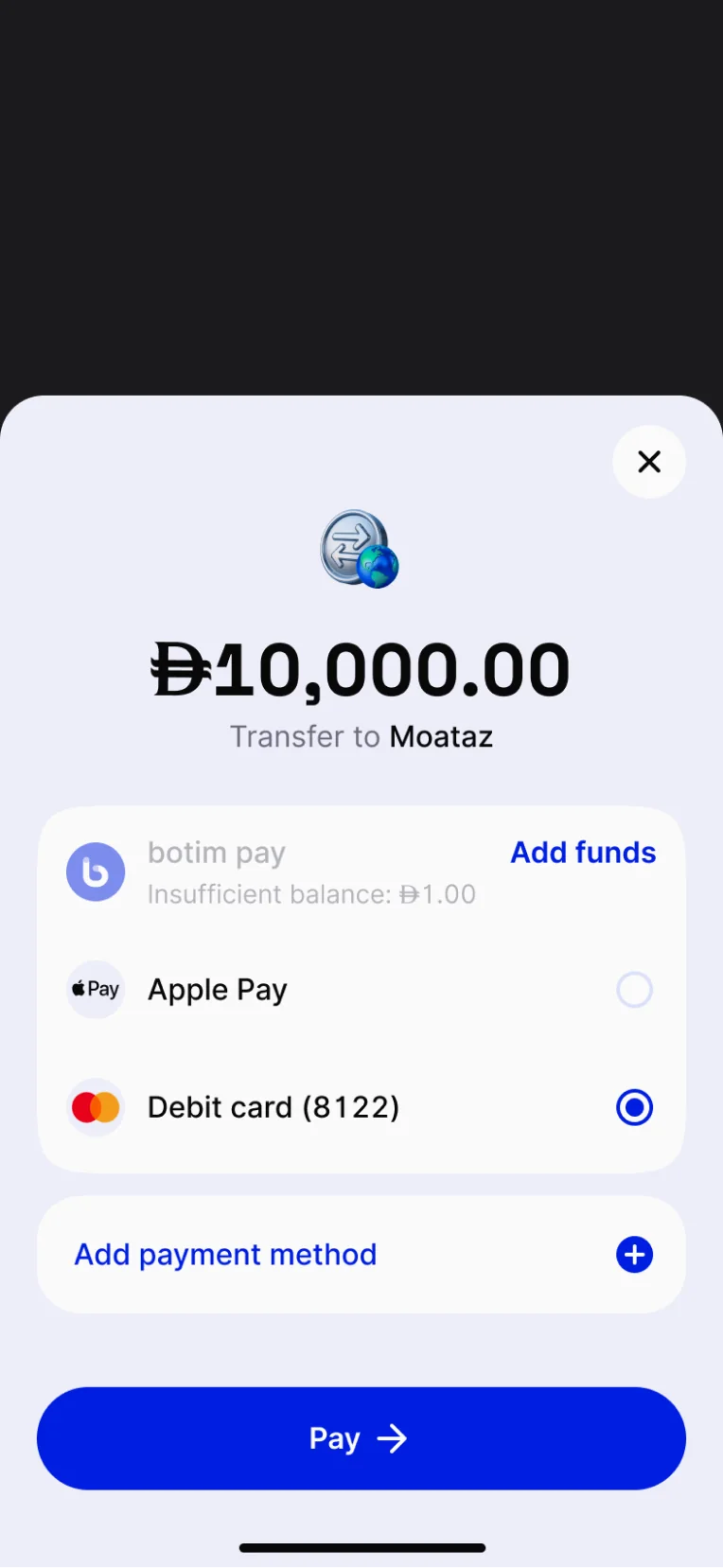
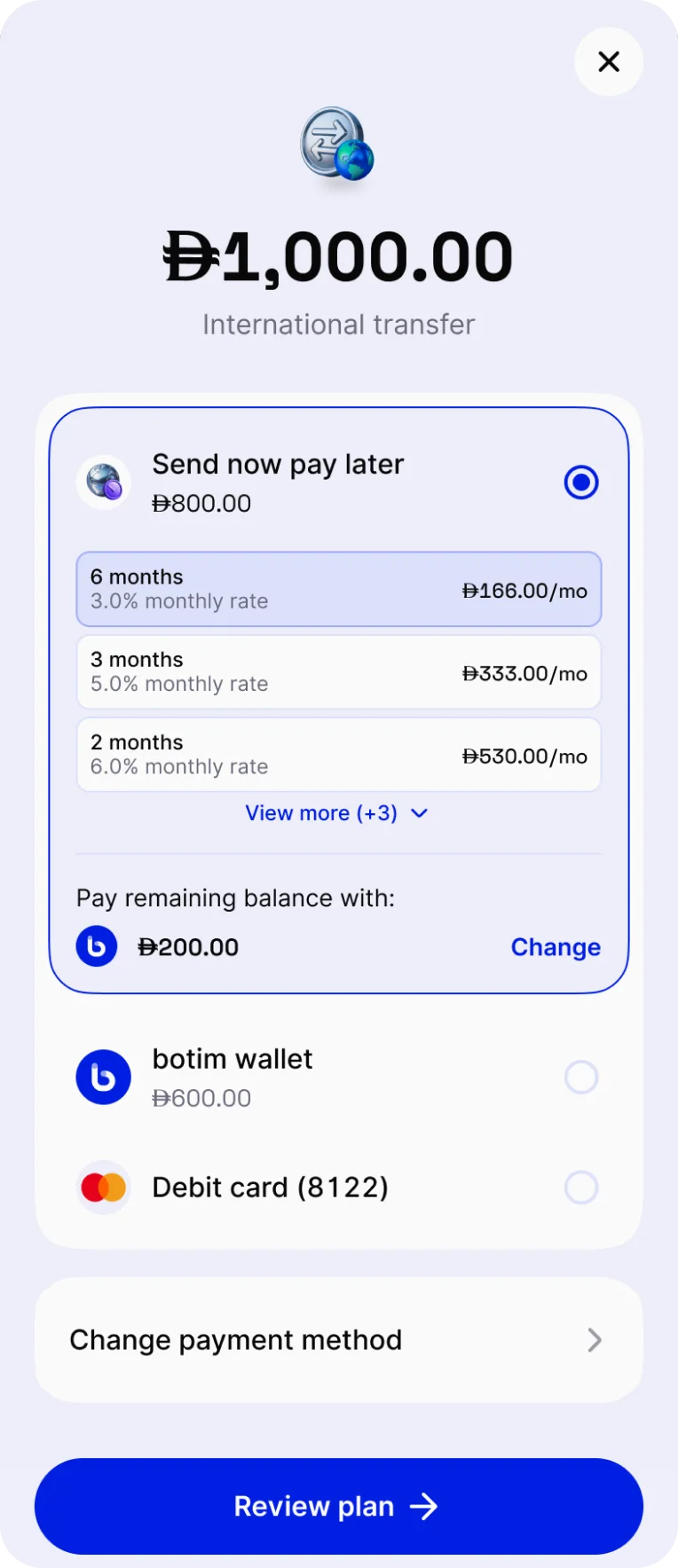
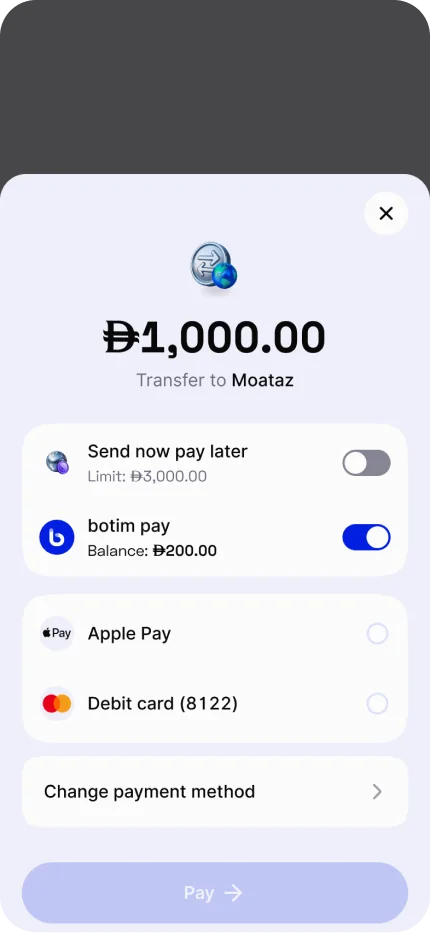
The problem · When payment choices require guesswork
- 01Hidden eligibilityUsers could not see which supplementary payment methods were available until they selected a primary funding source. They had to explore valid combinations through trial and error.
- 02Unpredictable behaviourSNPL and Wallet could sometimes act as independent primary sources and sometimes be combined. The same toggle could produce different outcomes depending on funding coverage and eligibility.
- 03Silent override riskIn some funding states, the proposed toggle model would automatically change an earlier selection to satisfy eligibility rules, without an explicit user decision.
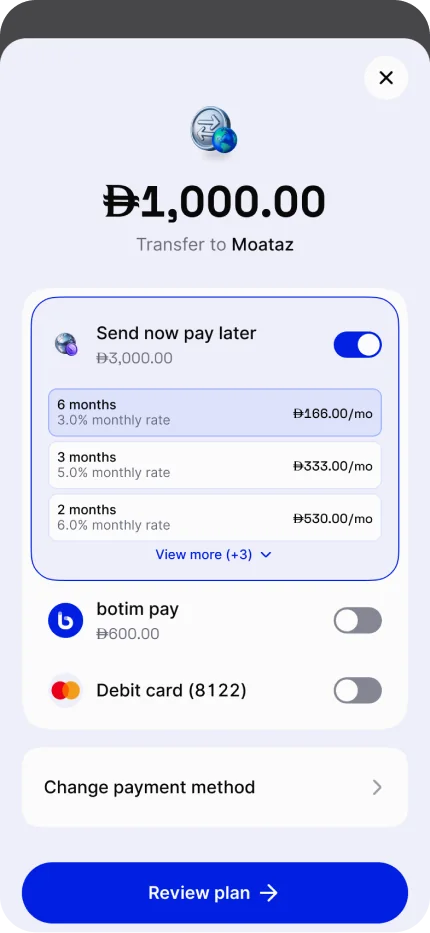
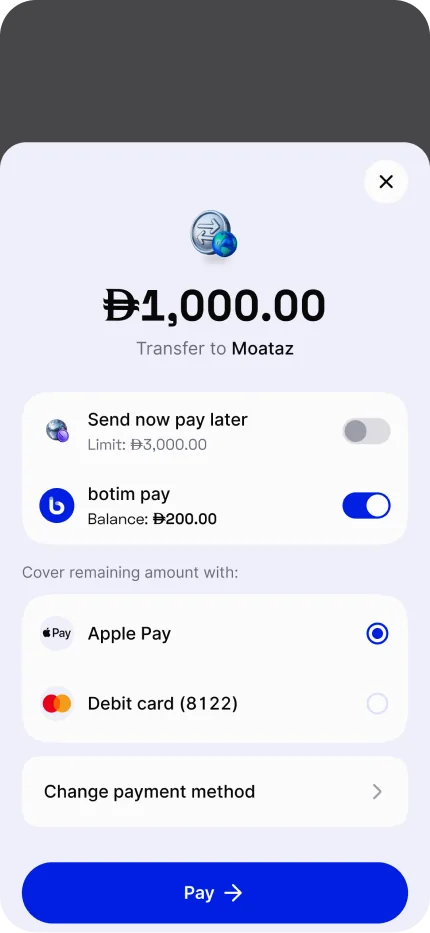
Decision 1 · Make the rules visible, keep the user in control
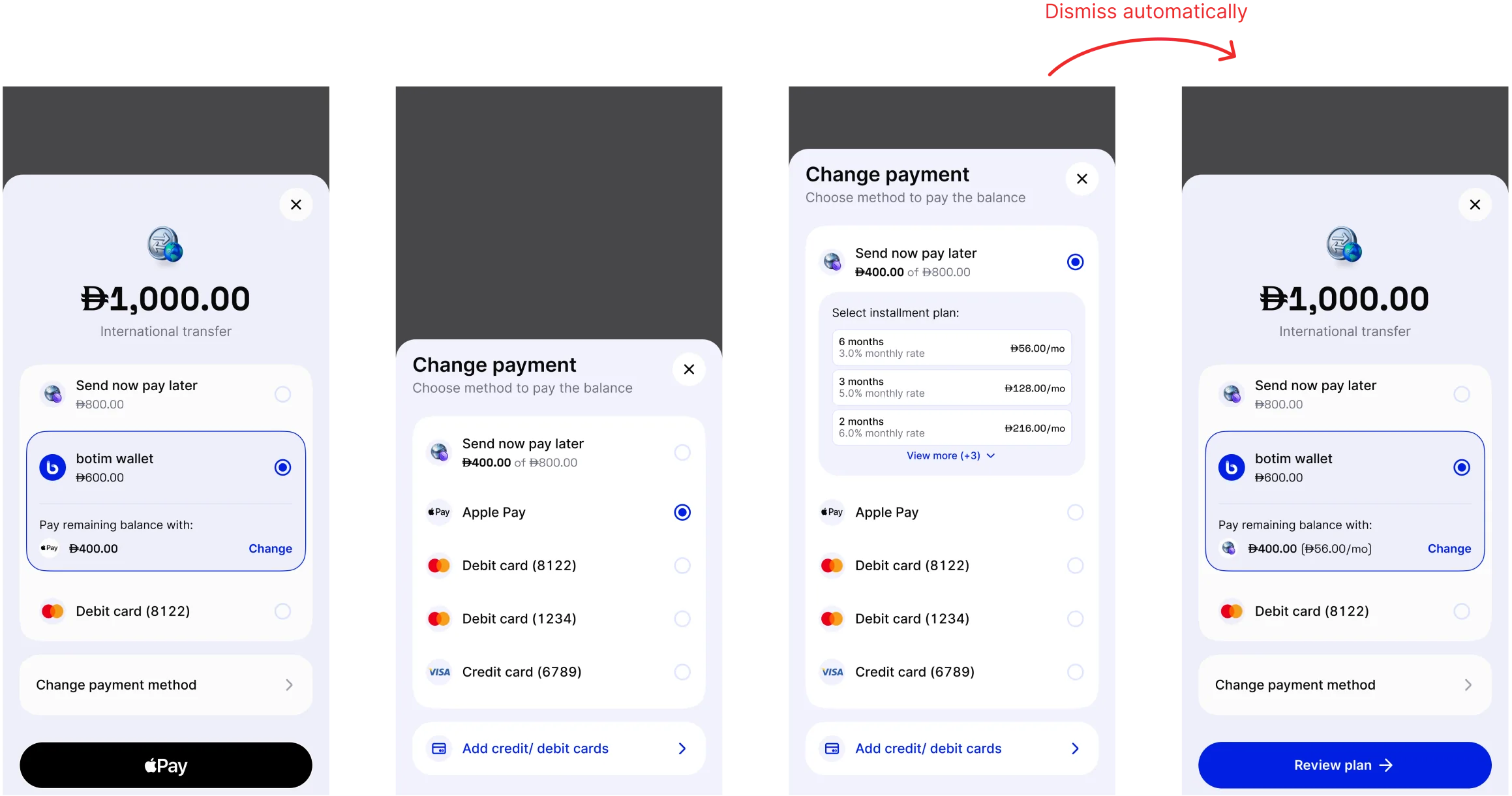
- 01Three funding slotsSNPL and Botim Wallet support eligible combined payments. A third slot remembers the user’s last standalone payment method.
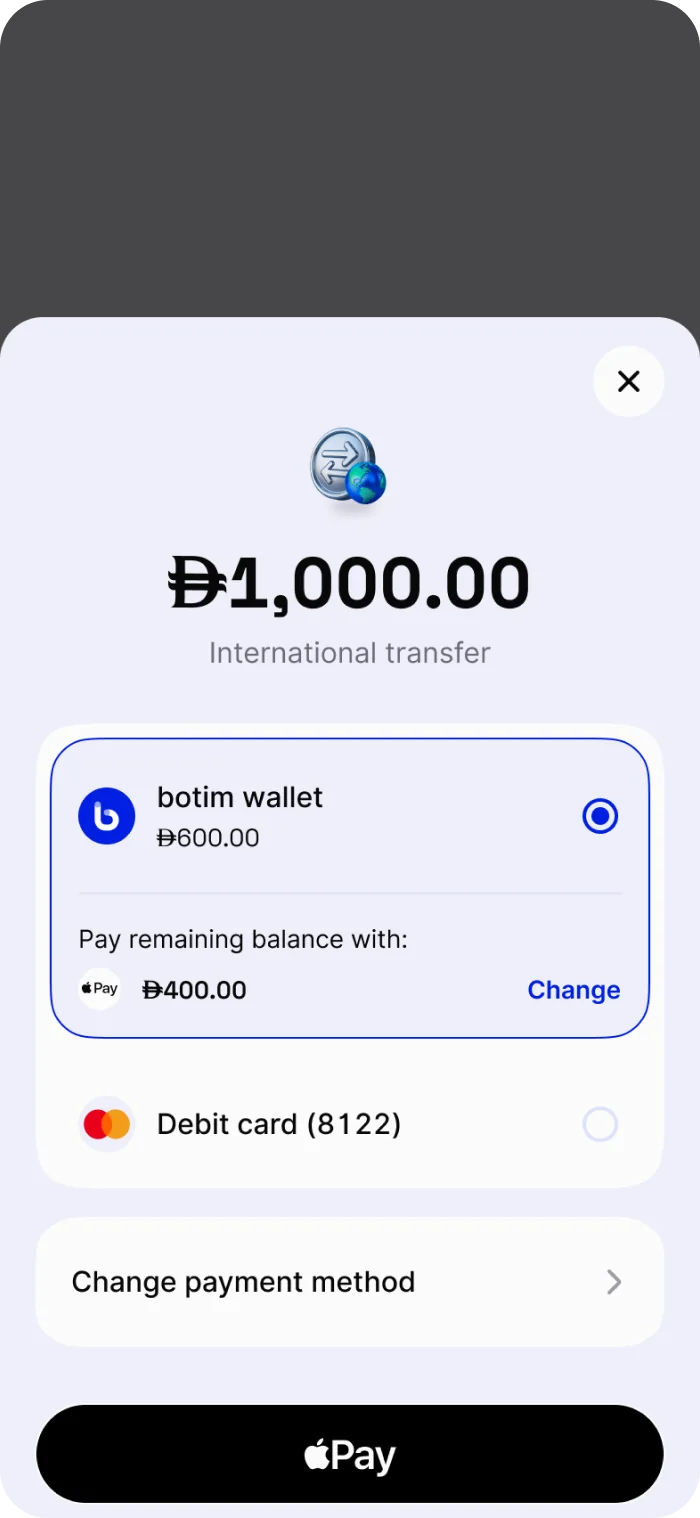
- 02Explicit remainderWhen the selected source cannot cover the payment, the remaining amount and supplementary method are shown clearly and can be changed.
- 03Reusable across servicesFunding eligibility varies by product. Unsupported slots are hidden, while the interaction pattern stays consistent.
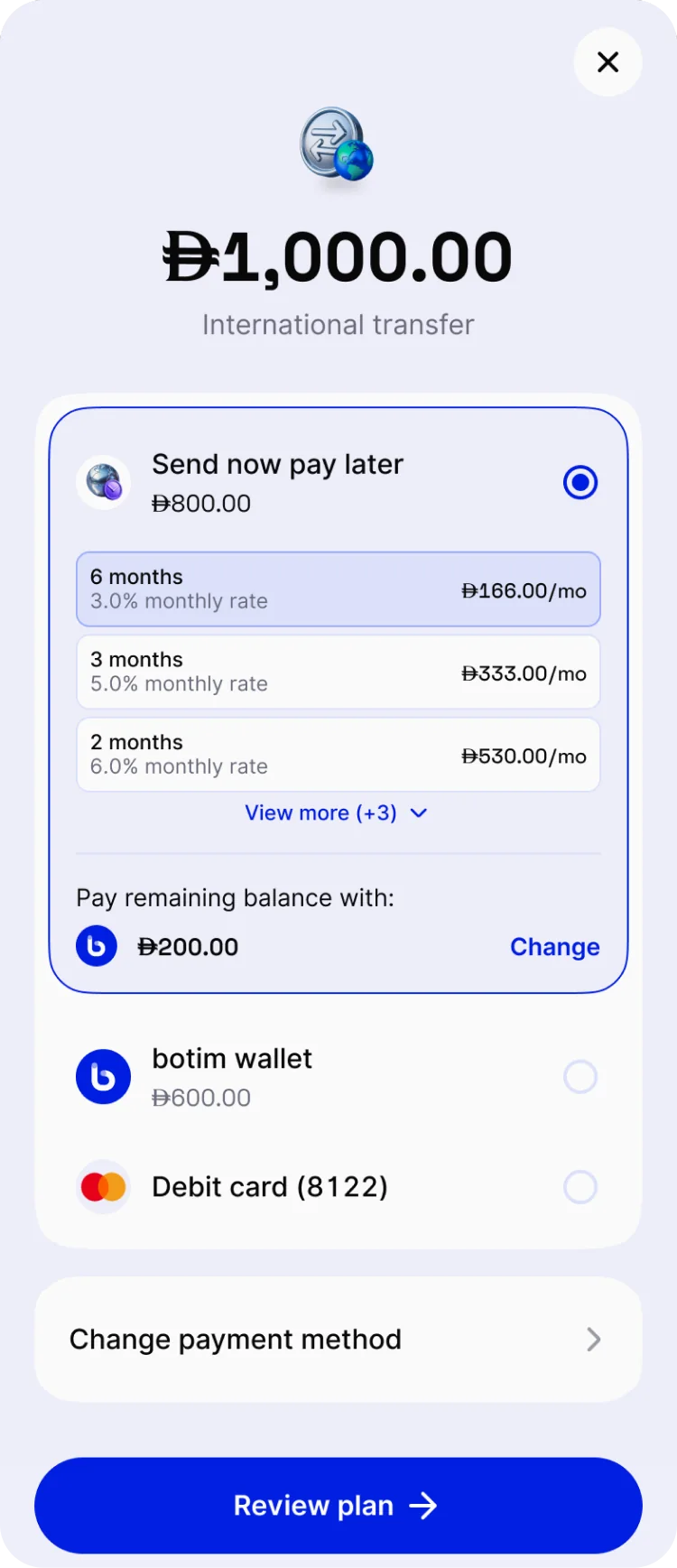
Decision 2 · Where pay-later asks its second question
Pay-later is the only method that needs a second decision: the instalment plan. We weighed three places to ask it.
Adds a tap for everyone to fix a problem only pay-later has.
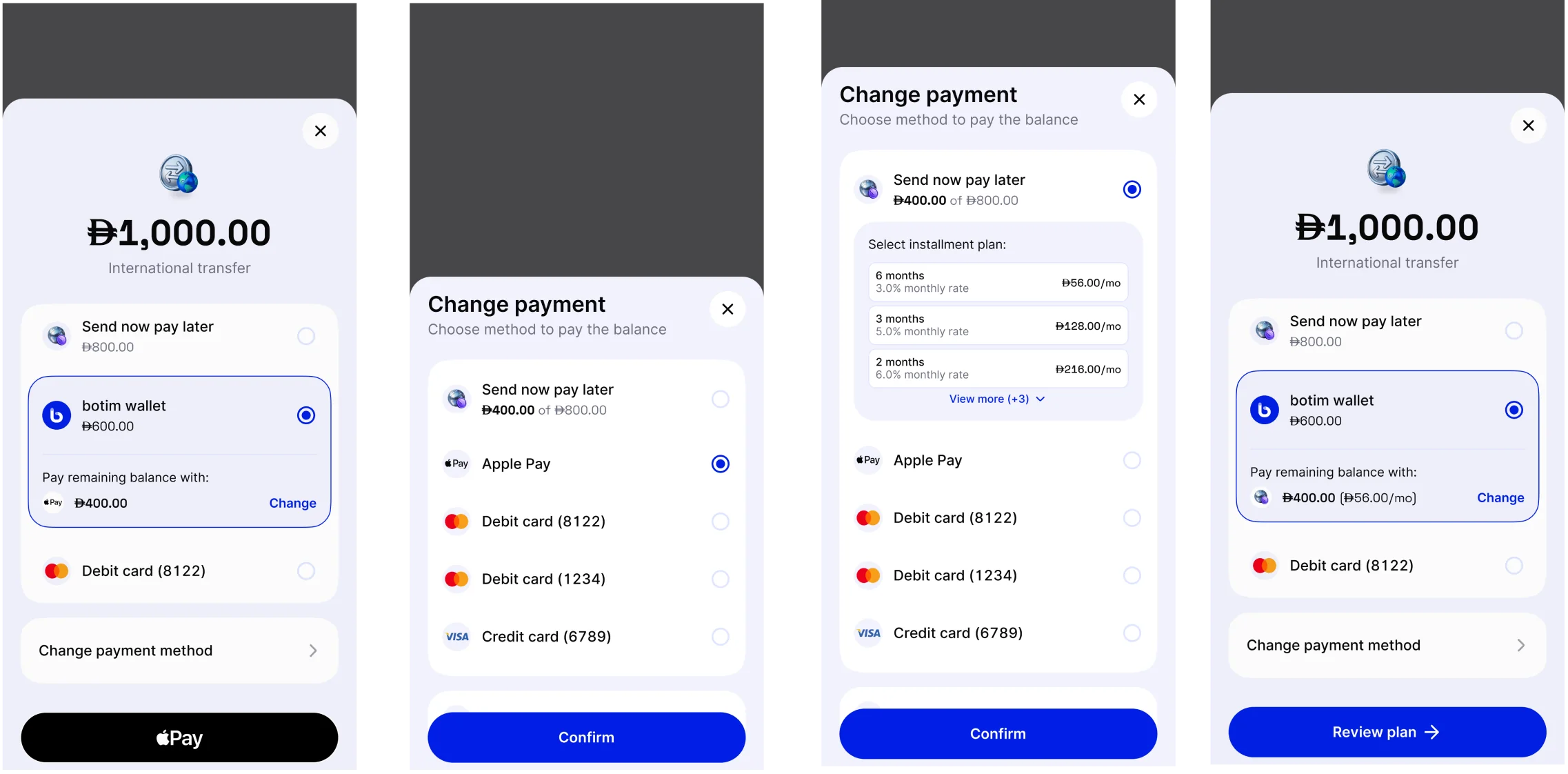
The cost of the plan is part of the decision, so it has to be visible when the user picks pay-later.
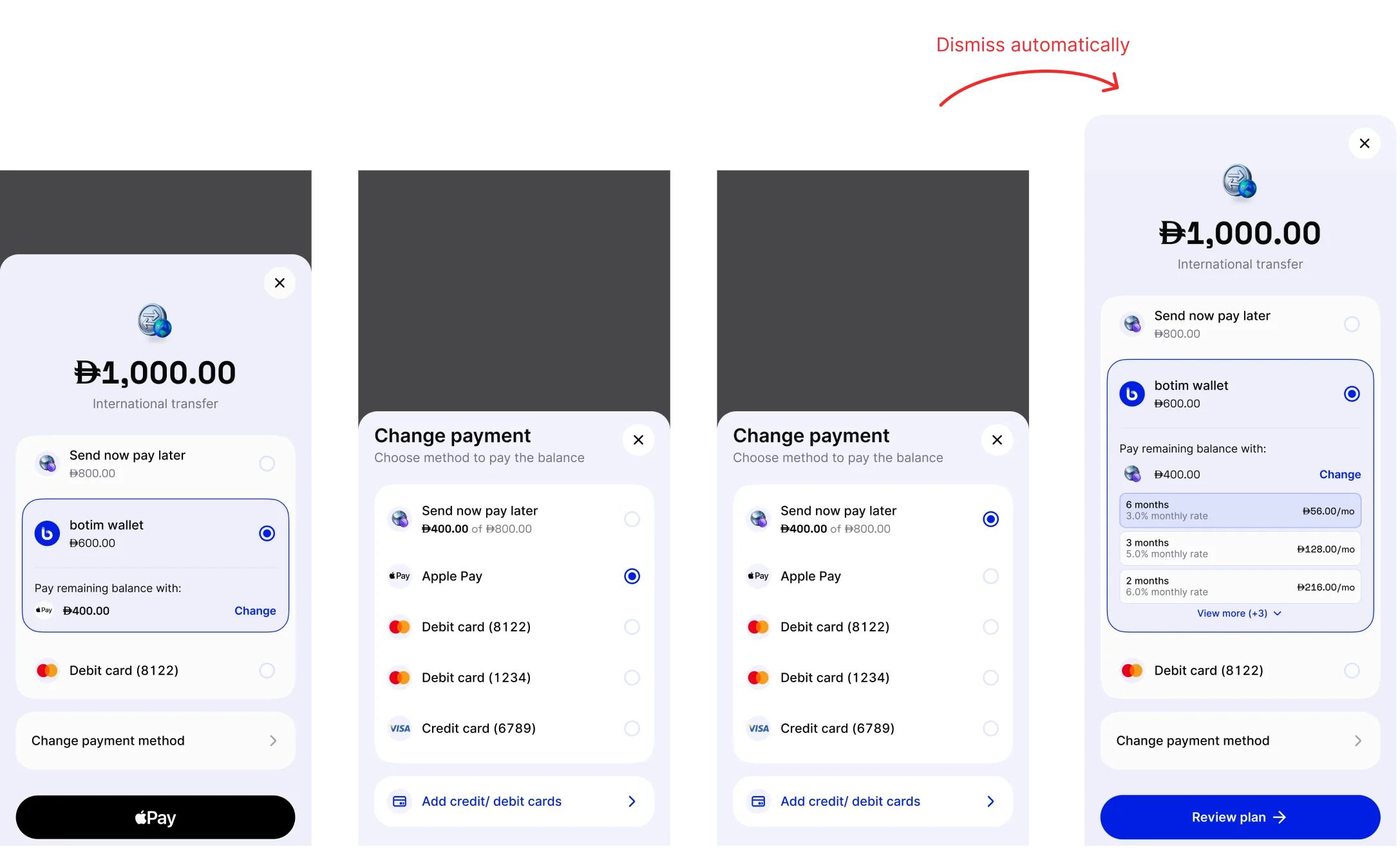
Keeps one tap to choose for every method. Pay-later’s extra decision stays where it belongs.
Edge cases · Partial coverage, unavailable methods, a missing card
- 01Partial coverageWhen a funding source covers only part of the payment, the remaining amount is shown explicitly with a changeable supplementary method.
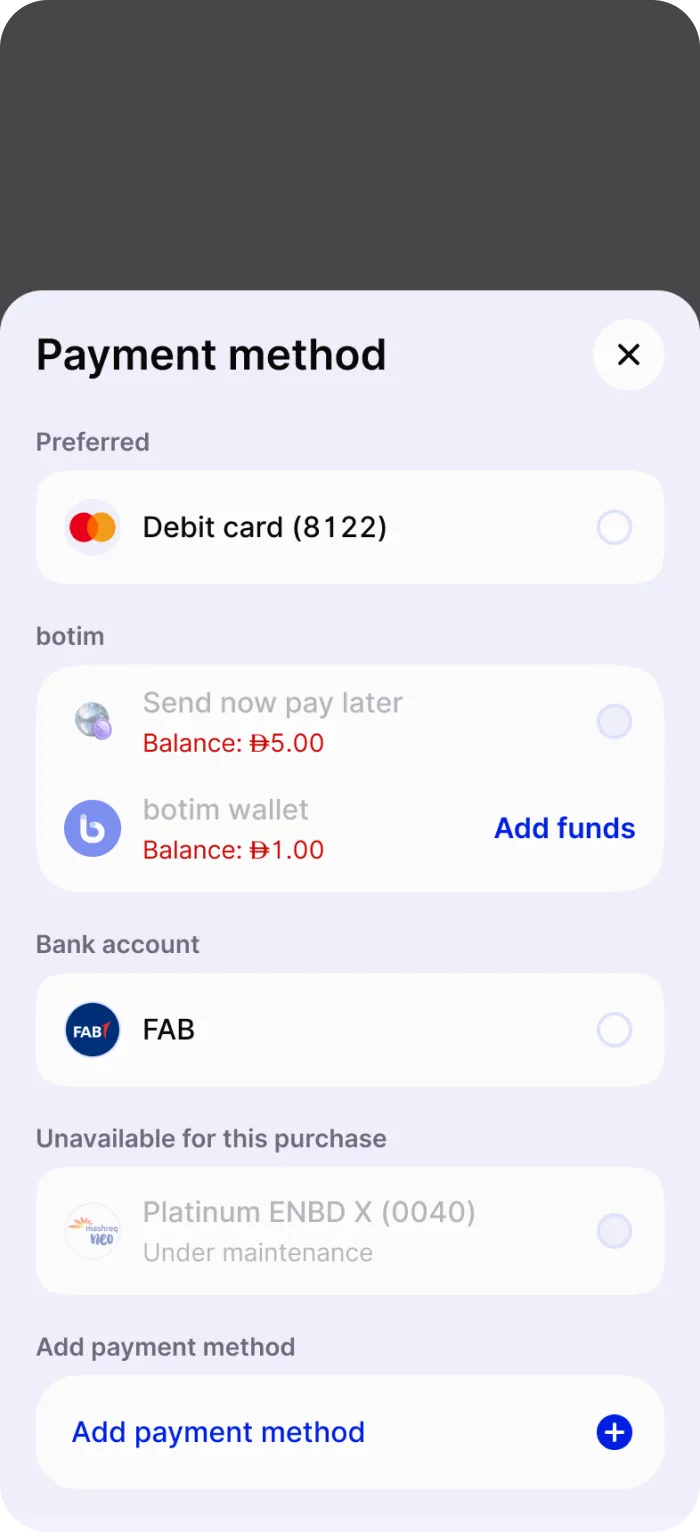
- 02UnavailableThe picker keeps the method visible and gives a reason: “Under maintenance”.
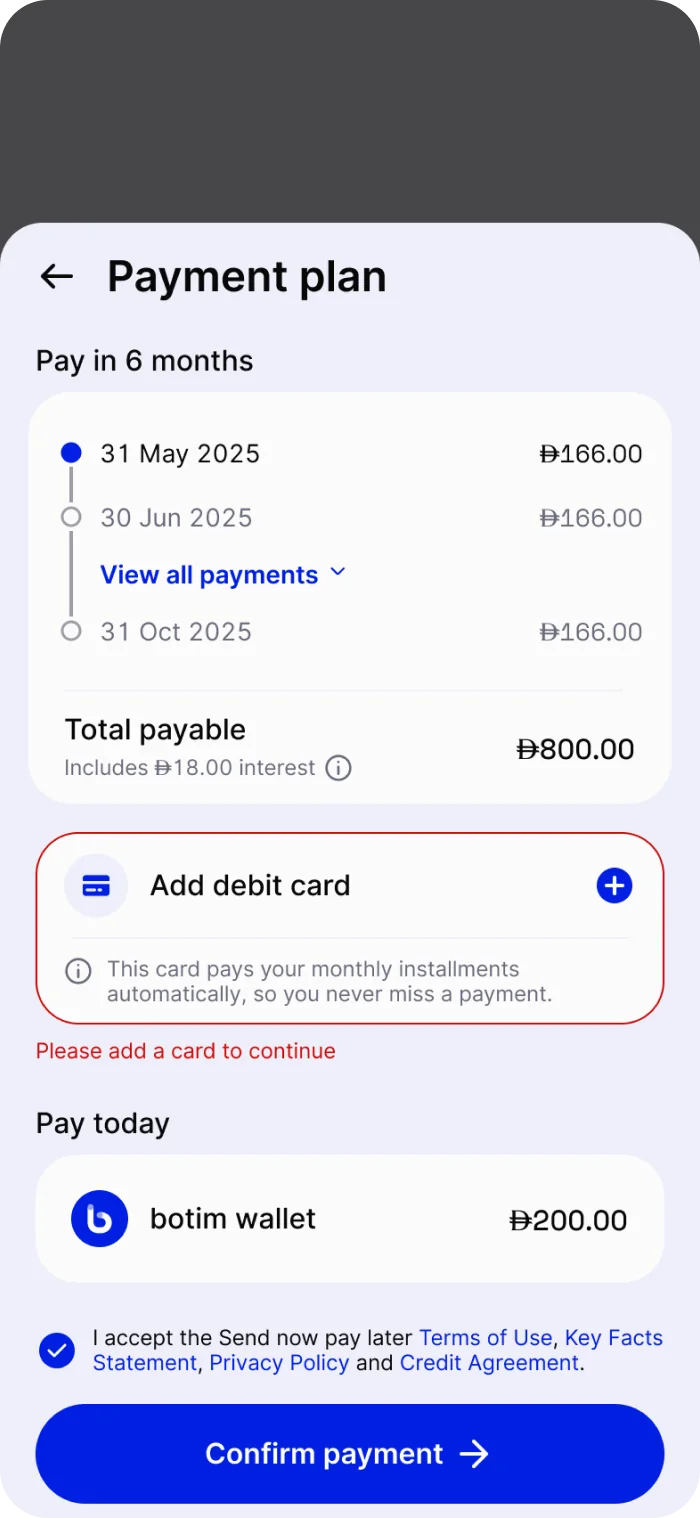
- 03Required debit cardIf a payment plan is selected without an eligible debit card, the plan highlights Add debit card and says “Please add a card to continue”, explaining that the card pays the monthly instalments automatically.
Results
The new checkout completes more payments.
In a randomized A/B test on remittance checkout, the redesign beat the previous checkout on both payment method selection and payment completion. It is now live for all remittance users.